Voice OTP & A2P SMS Routes Available

Why Enterprises Are Switching to Voice OTP for Authentication

As digital transactions continue to grow, enterprises face increasing pressure to secure user authentication while maintaining a smooth customer experience. Traditional methods like SMS OTP have been widely used, but growing security threats and delivery challenges are pushing businesses to explore better alternatives.
One solution gaining rapid adoption is Voice OTP (One-Time Password via voice call).
So, why are enterprises switching to Voice OTP?
Let’s explore the key reasons behind this shift and how it’s transforming secure authentication.
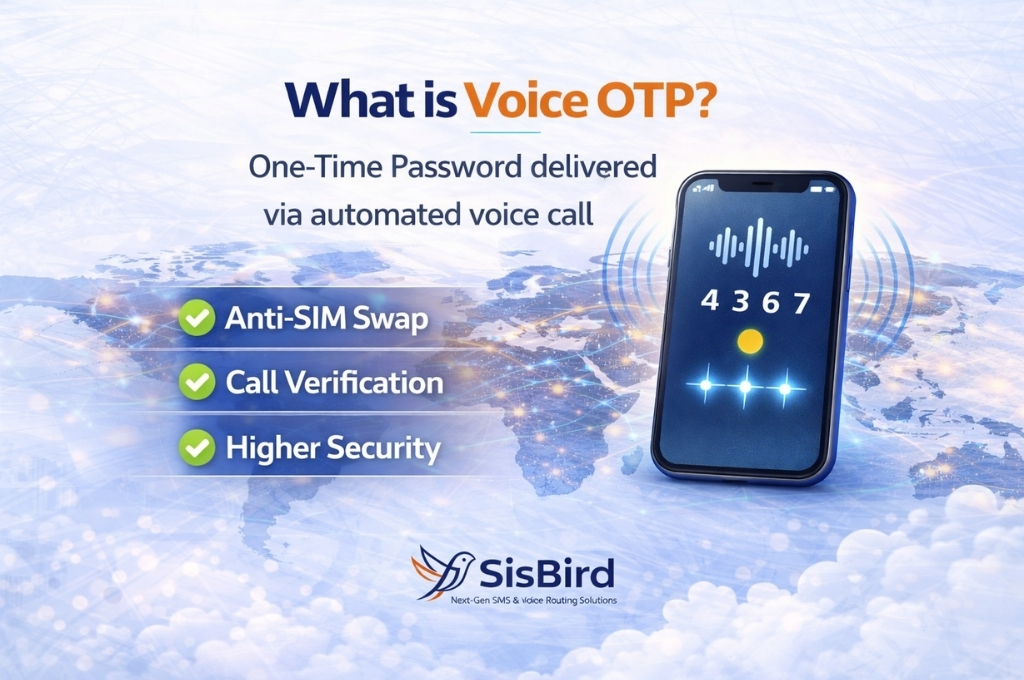
What is Voice OTP?
Voice OTP is a verification method where a one-time password is delivered to users via an automated voice call using Text-to-Speech (TTS) or pre-recorded audio.
Instead of reading a text message, users receive a call where the OTP is spoken aloud, ensuring real-time verification.
Top Reasons Enterprises Are Switching to Voice OTP
1. Stronger Security Against Fraud
SMS OTP is vulnerable to:
- SIM swap attacks
- SMS interception
- Malware access
Voice OTP significantly reduces these risks by:
- Requiring real-time call access
- Being harder to intercept digitally
- Ensuring user presence during authentication
This makes Voice OTP a preferred choice for banking, fintech, and high-risk transa
2. Higher Delivery Success Rate
In many regions, SMS delivery can fail due to:
- Network congestion
- Spam filtering
- Operator restrictions
Voice OTP uses voice routing networks, which often have:
- Better global reach
- Higher delivery success
- Faster fallback options
3. Better Performance in Low-SMS Regions
Emerging markets often face unreliable SMS infrastructure.
Voice OTP ensures:
- Connectivity even when SMS fails
- Better reach in rural or low-network areas
- Consistent delivery experience
4. Real-Time User Verification
Voice OTP adds a layer of real-time interaction:
- Confirms the user is actively present
- Reduces automated bot attacks
- Improves authentication accuracy
5. Improved User Trust & Experience
Hearing an OTP via a call can feel:
- More secure
- More direct
- Easier for non-technical users
It also helps:
- Visually impaired users
- Users facing SMS delays
6. Perfect as a Fallback for SMS OTP
Enterprises don’t completely replace SMS—they optimize it.
Common strategy:
- Send SMS OTP
- If failed → trigger Voice OTP
This hybrid approach ensures:
- Maximum delivery rate
- Better customer experience
- Reduced login failures
7. Compliance & Enterprise-Grade Security Needs
Many industries now require:
- Stronger authentication methods
- Multi-layer verification systems
Voice OTP supports:
- Multi-factor authentication (MFA)
- Regulatory compliance
- Secure identity verification
⚖️ Voice OTP vs SMS OTP: Quick Comparison
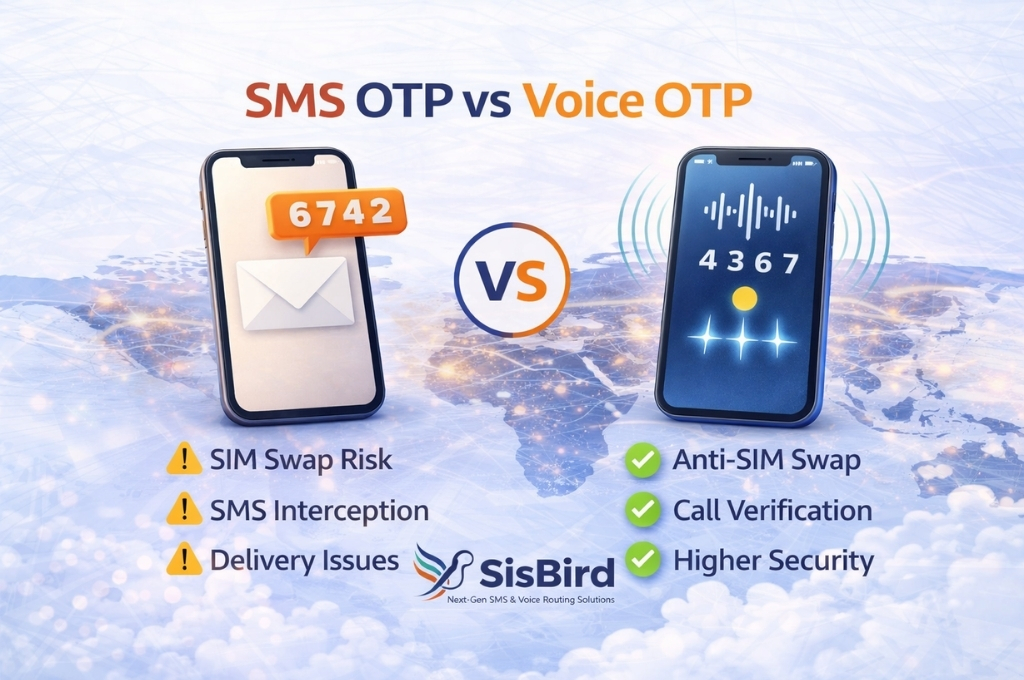
| Feature | SMS OTP | Voice OTP |
|---|---|---|
| Security Level | Medium | High |
| Delivery Rate | Moderate | High |
| Fraud Resistance | Low–Medium | High |
| User Interaction | Passive | Active |
How SisBird Supports Enterprise Authentication
At SisBird, we provide enterprise-grade communication solutions:
- High-quality Voice OTP routes
- Reliable A2P SMS delivery
- Global telecom connectivity
- Low latency & high performance
Our solutions help businesses:
→ Improve OTP delivery rates
→ Reduce fraud risks
→ Enhance user authentication experience
"Ante iaculis feugiat dui magna mi scelerisque euismod nascetur nullam hac consectetur class metus feugiat ullamcorper nisl eu justo in a scelerisque. Feugiat sociis platea felis sed lacus maecenas consectetur elementum vestibulum ad aenean nostra sapien dictumst condimentum lectus. A pretium orci vestibulum aenean semper et congue sapien erat a cum adipiscing sagittis."
"Ante iaculis feugiat dui magna mi scelerisque euismod nascetur nullam hac consectetur class metus feugiat ullamcorper nisl eu justo in a scelerisque. Feugiat sociis platea felis sed lacus maecenas consectetur elementum vestibulum ad aenean nostra sapien dictumst condimentum lectus. A pretium orci vestibulum aenean semper et congue sapien erat a cum adipiscing sagittis."
Looking to upgrade your authentication system?

Next-Gen
Routing Solutions
Looking for stable SMS or voice routes? We are ready to help.
Start Your Routing Partnership
FAQ...
1. Why are enterprises moving away from SMS OTP?
Due to security vulnerabilities like SIM swap attacks and inconsistent delivery rates.
2. Is Voice OTP more secure than SMS OTP?
Yes, Voice OTP is more secure because it is harder to intercept and requires real-time user interaction.
3. Can Voice OTP replace SMS OTP completely?
Not always. Most enterprises use Voice OTP as a fallback or part of a hybrid authentication strategy.
4. Which industries benefit most from Voice OTP?
Banking, fintech, e-commerce, healthcare, and any business handling sensitive user data.
5. Does Voice OTP work globally?
Yes, especially when powered by reliable telecom routing providers like SisBird.
🏁 Conclusion
The shift toward Voice OTP is not just a trend—it’s a response to growing security challenges and user expectations.
Enterprises are adopting Voice OTP because it offers:
- Stronger security
- Higher delivery success
- Better user verification
For businesses aiming to build secure, reliable, and scalable authentication systems, Voice OTP is becoming an essential solution.
