Voice OTP & A2P SMS Routes Available

How to Improve VOIP Call Quality in VOIP Routing (Complete Guide)

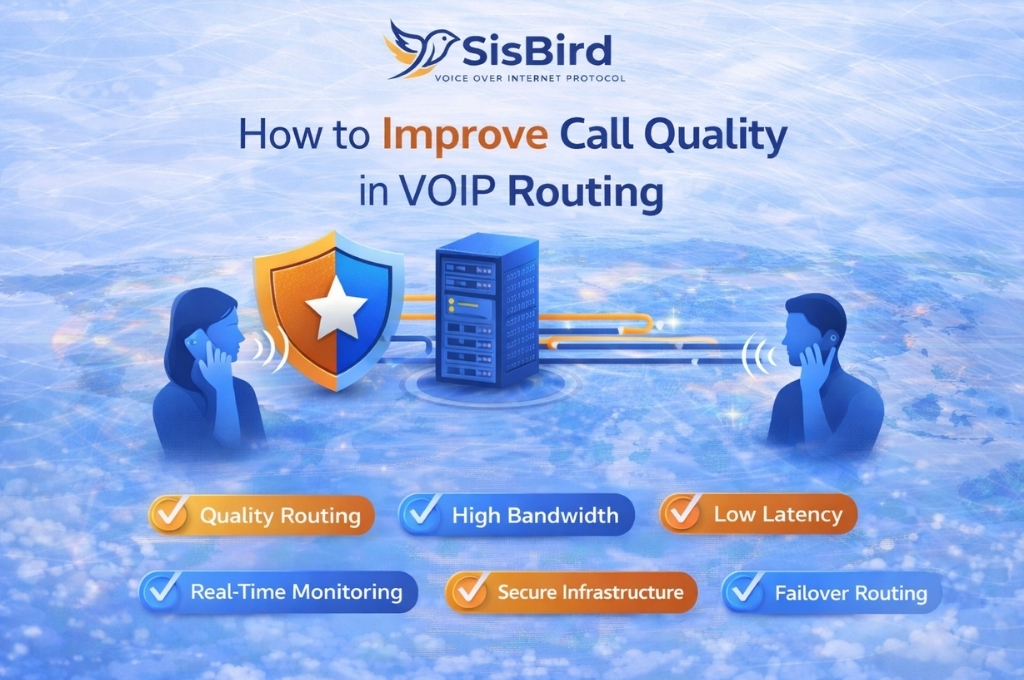
Delivering high-quality voice communication is essential for businesses using VOIP systems. Poor audio, delays, and dropped calls can harm customer experience and reduce operational efficiency.
To solve this, companies must focus on VOIP call quality optimization, including better routing, network stability, and monitoring.
Behind every clear call is a powerful telecom routing infrastructure that ensures voice data travels quickly and reliably across global networks.
What Affects VOIP Call Quality?
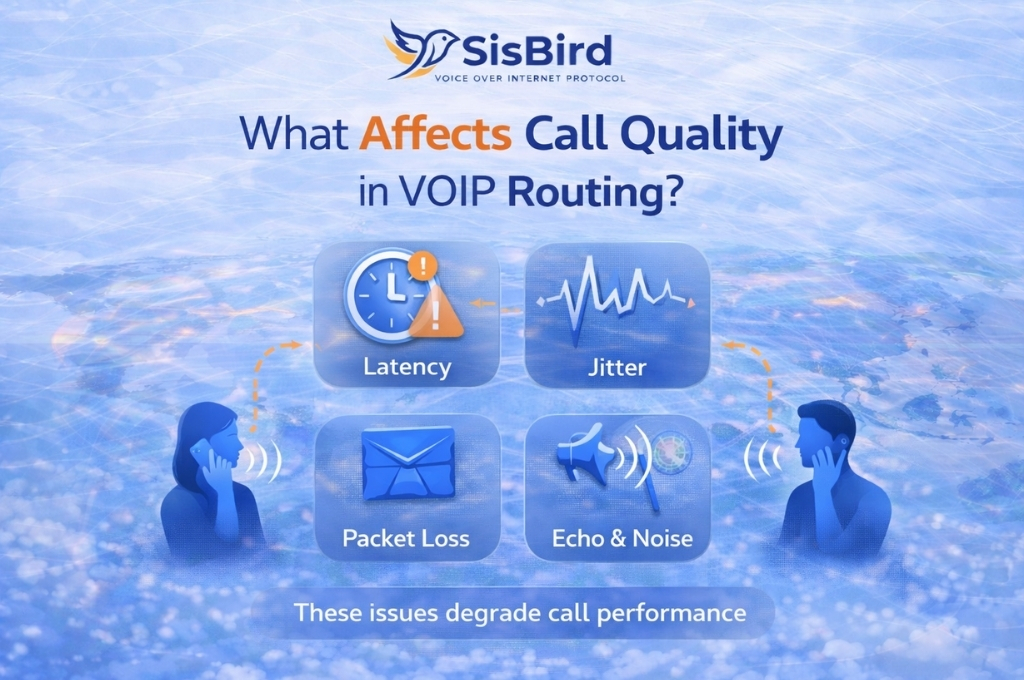
Understanding the root causes is the first step to improving performance.
Latency
Delay in voice transmission causing lag in conversation.
Jitter
Inconsistent packet arrival leads to broken audio.
Packet Loss
Missing voice packets result in unclear or robotic sound.
Echo & Noise
Audio feedback and distortion reduce clarity.
These issues often occur due to poor VOIP routing systems and network instability.
Best Practices to Improve VOIP Call Quality
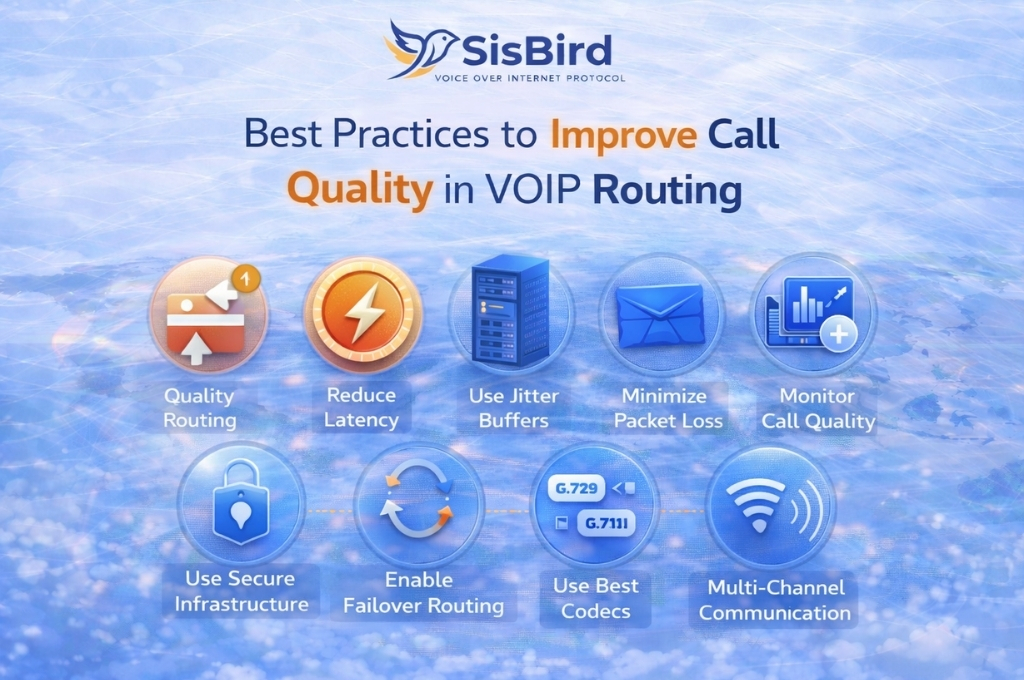
1. Use High-Quality Routing
Avoid cheap or grey routes that degrade call performance.
Instead, use quality-based routing for better voice clarity.
Learn more in our guide on how VOIP routing works behind the scenes.
2. Reduce Latency in VOIP
Latency directly affects real-time communication.
Optimize by:
- Using nearby servers
- Reducing routing hops
- Choosing low-latency providers
3. Fix VOIP Jitter with Buffers
Jitter buffers smooth packet delivery.
Benefits:
- Stable audio
- Fewer interruptions
- Better call experience
4. Prevent Packet Loss
Packet loss reduces call quality significantly.
Improve by:
- Using stable networks
- Avoiding congestion
- Monitoring traffic
5. Monitor VOIP Call Quality
Real-time monitoring helps identify issues early.
Track:
- Latency
- Jitter
- Packet loss
- Call success rate
6. Use Secure Routing Infrastructure
Secure systems improve both performance and safety.
Important for:
- Voice OTP authentication systems
- Business communication
Compare security methods in SMS OTP vs Voice OTP.
7. Use the Right Codecs
Codecs affect voice compression and quality.
Best options:
- G.711 → High quality
- G.729 → Balanced performance
8. Ensure Sufficient Bandwidth
Low bandwidth leads to poor performance.
Best practices:
- Dedicated VOIP bandwidth
- QoS (Quality of Service) settings
9. Enable Failover Routing
Backup routes prevent call drops.
Essential for:
- Call centers
- Global communication
10. Combine VOIP with Multi-Channel Communication
Enhance reliability using:
- A2P SMS delivery systems
- Voice broadcasting (TTS)
Common Mistakes to Avoid
- Choosing cheapest routes only
- Ignoring latency and jitter
- No monitoring tools
- Poor codec selection
- Lack of backup routing
How SisBird Improves VOIP Call Quality
At SisBird, we provide:
- Premium VOIP routing
- Low latency global network
- Intelligent failover routing
- Secure telecom infrastructure
Looking for a reliable VOIP routing provider? SisBird ensures high-quality voice communication worldwide.
Want to improve your VOIP routing performance and call quality?

Next-Gen
Routing Solutions
Looking for stable SMS or voice routes? We are ready to help.
Start Your Routing Partnership
VOIP call qualityImproving FAQ..
1. How can I improve VOIP call quality?
Use high-quality routing, reduce latency, monitor performance, and ensure stable bandwidth.
2. What causes poor VOIP quality?
Latency, jitter, packet loss, and poor routing are the main causes.
3. How to reduce jitter in VOIP?
Use jitter buffers and optimize routing paths.
4. Does routing affect VOIP quality?
Yes, routing is one of the most important factors in call quality.
5. Which codec is best for VOIP?
G.711 for quality and G.729 for efficiency.
🏁 Conclusion
Improving VOIP call quality requires a combination of optimized routing, network performance, and real-time monitoring.
By applying these best practices, businesses can:
- Deliver crystal-clear voice communication
- Reduce call failures
- Improve customer satisfaction.
