Voice OTP & A2P SMS Routes Available


Why Voice OTP Is Becoming Essential for Secure Authentication


As digital services continue to grow, ensuring secure user authentication has become one of the most critical challenges for businesses. Online platforms, financial services, mobile applications, and e-commerce companies must verify user identities while protecting accounts from fraud and cyber threats.
One of the most widely used authentication methods is the One-Time Password (OTP). Traditionally, OTP codes are sent through SMS messages, but with increasing network congestion, delivery delays, and security concerns, many businesses are now adopting Voice OTP verification as a reliable alternative.
Voice OTP technology delivers authentication codes through automated voice calls, providing an additional layer of security and ensuring that verification codes reach users quickly and reliably.
What Is Voice OTP?
Voice OTP is an authentication method where a one-time password is delivered to a user through an automated voice call instead of a text message.
When a user requests verification, the system generates a temporary code and delivers it through a voice call that reads the OTP aloud. The user then enters the code into the application to confirm their identity.
Voice OTP is widely used in industries where secure and reliable authentication is critical, including banking, fintech platforms, digital wallets, and online services.
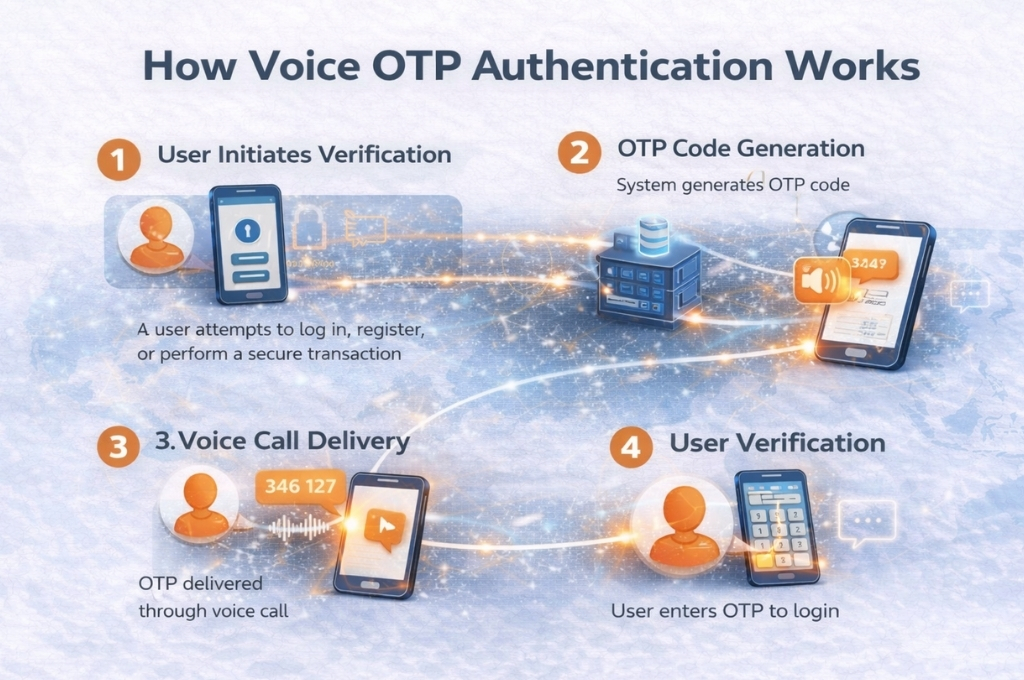
How Voice OTP Authentication Works
The Voice OTP verification process is simple and efficient.
Step 1: User Initiates Verification
A user attempts to log in, register, or perform a secure transaction on a website or mobile application.
Step 2: OTP Code Generation
The system automatically generates a unique one-time password for verification.
Step 3: Voice Call Delivery
The OTP is delivered through an automated voice call using telecom routing infrastructure.
Step 4: User Verification
The user listens to the code and enters it into the application to complete authentication.
This process ensures that users receive verification codes even if SMS messages are delayed or blocked.
Why Voice OTP Is Becoming More Important
With increasing digital fraud and security threats, businesses are looking for stronger authentication methods. Voice OTP offers several advantages over traditional SMS-based verification.
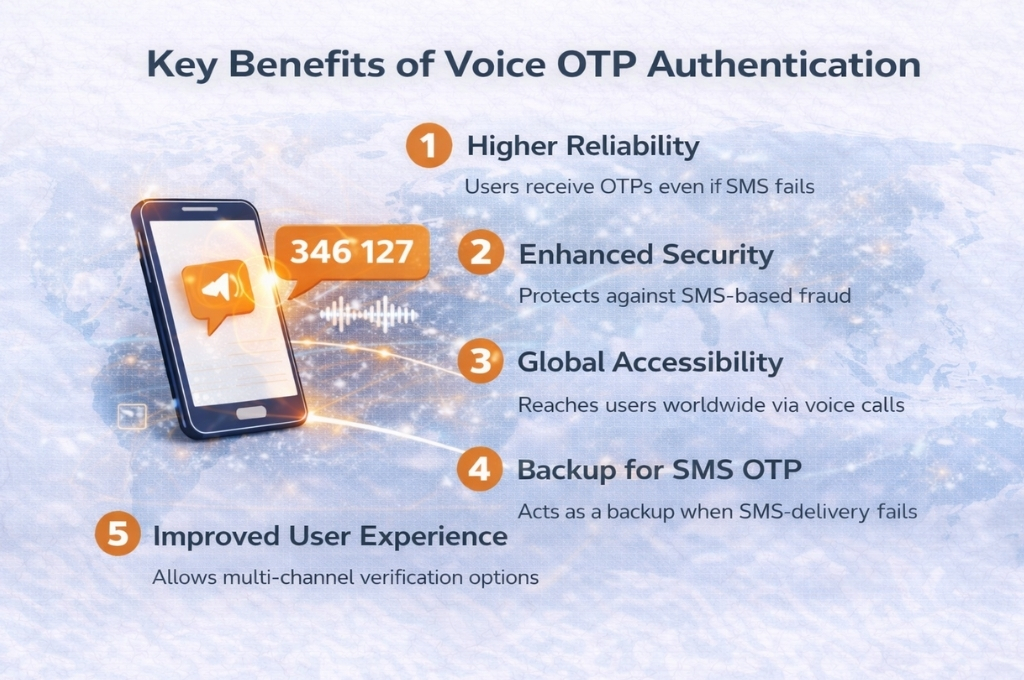
1. Higher Reliability
SMS messages can sometimes be delayed due to network congestion, carrier filtering, or international routing issues.
Voice OTP provides an alternative communication channel that ensures verification codes reach users even when SMS delivery fails.
2. Better Security
Voice OTP helps reduce the risk of certain types of fraud such as:
• SMS interception attacks
• SIM swap fraud
• SMS gateway vulnerabilities
Because voice calls use a different telecom routing infrastructure, they add an extra layer of protection to authentication systems.
3. Global Accessibility
Voice OTP can reach both mobile phones and landlines, making it useful in regions where SMS delivery may not always be reliable.
This is especially important for businesses operating in multiple countries with varying telecom network conditions.
4. Ideal Backup for SMS OTP
Many businesses implement multi-channel authentication systems, where Voice OTP acts as a backup when SMS OTP fails.
This ensures that users can always complete verification without frustration.
5. Improved User Experience
Voice OTP can be particularly helpful for:
• Users with accessibility needs
• Customers using basic mobile phones
• Regions with limited SMS reliability
Providing multiple authentication options improves overall user experience and increases successful login rates.
Industries That Use Voice OTP
Voice OTP authentication is widely used in industries that require high security and reliable user verification.
Fintech and Banking
Financial platforms use Voice OTP for:
• Login verification
• Transaction confirmation
• Fraud protection
E-commerce Platforms
Online stores use OTP authentication for:
• Account verification
• Payment confirmation
• Customer identity validation
Digital Wallets and Payment Systems
Payment services rely on Voice OTP to secure transactions and prevent unauthorized access.
SaaS Platforms
Software companies use OTP authentication to protect user accounts and ensure secure access to cloud services.
Benefits of Voice OTP for Businesses
Voice OTP offers several key advantages for companies that rely on secure authentication systems.
Increased Security
Voice verification adds an additional security layer to prevent unauthorized access.
Higher Delivery Success Rate
Voice calls often reach users when SMS messages fail.
Global Telecom Coverage
Voice OTP routes allow businesses to verify users worldwide.
Reduced Authentication Failures
Multi-channel authentication improves login success rates and reduces user frustration.
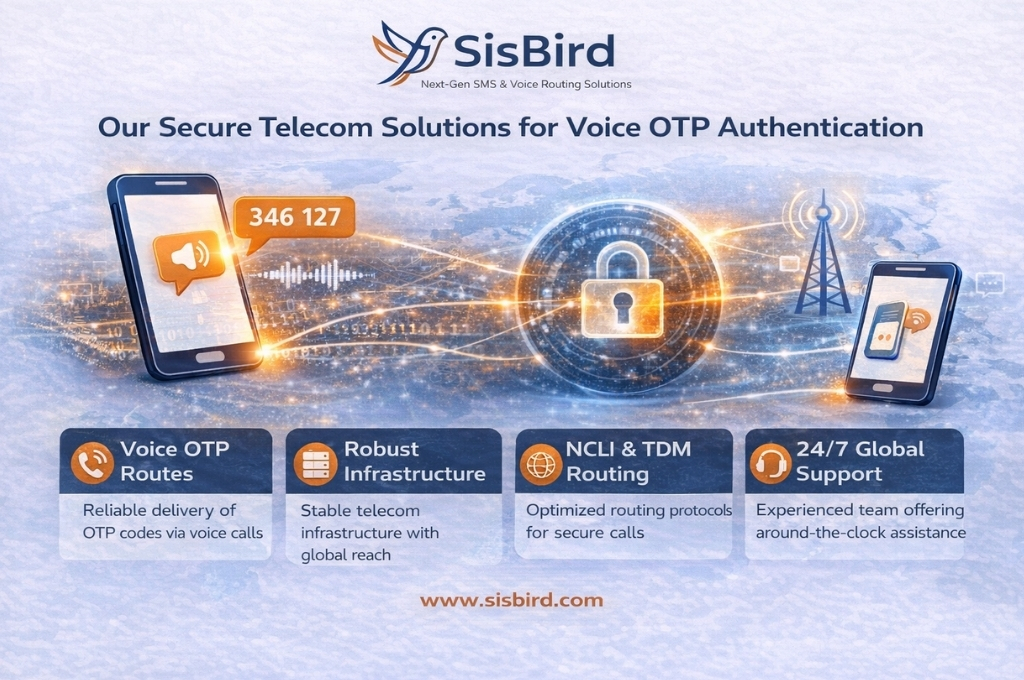
How SisBird Supports Voice OTP Authentication
SisBird provides reliable telecom routing solutions designed for secure global communication.
Our services include:
• Voice OTP routes for secure user verification
• A2P SMS messaging routes
• Text-to-Speech (TTS) voice broadcasting
• NCLI and TDM voice routing solutions
• VOS3000 softswitch rental
• VPN SBO connectivity solutions
With stable telecom infrastructure and optimized routing networks, SisBird ensures fast OTP delivery and reliable authentication performance.
The Future of Secure Authentication
As digital services expand globally, the need for strong authentication systems will continue to grow. Businesses must protect their platforms while maintaining a smooth user experience.
Voice OTP is becoming an essential part of modern authentication strategies because it provides reliability, security, and global accessibility.
Organizations that implement multi-channel verification systems combining SMS OTP and Voice OTP will be better prepared to prevent fraud and ensure secure user access.
Conclusion
Voice OTP verification is rapidly becoming a critical authentication method for businesses worldwide. It provides reliable code delivery, improves security, and ensures users can verify their identity even when SMS messages fail.
By implementing Voice OTP solutions, companies can strengthen their authentication systems while maintaining seamless communication with customers.
With telecom providers like SisBird, businesses can access reliable voice routing infrastructure that ensures fast and secure OTP delivery across global networks.
Frequently Asked Questions About Voice OTP Authentication
1. What is Voice OTP authentication?
Voice OTP authentication is a security method where a one-time password is delivered to users through an automated voice call instead of a text message. The system reads the OTP code during the call, allowing users to verify their identity securely.
2. How does Voice OTP work?
Voice OTP works by generating a one-time password when a user requests verification. The system then automatically places a voice call to the user’s phone and reads the verification code aloud. The user enters the code to complete authentication.
3. Why is Voice OTP more reliable than SMS OTP?
Voice OTP can be more reliable because it uses voice call networks instead of SMS messaging infrastructure. If SMS messages are delayed or blocked due to network congestion or filtering, Voice OTP ensures users still receive their verification code.
4. When should businesses use Voice OTP?
Businesses should use Voice OTP when secure authentication is required, especially for:
• Banking and fintech transactions
• User login verification
• Payment confirmation
• Account recovery
• Two-factor authentication (2FA)
Voice OTP is also commonly used as a backup verification method when SMS OTP fails.
5. Can Voice OTP reach landline phones?
Yes. One major advantage of Voice OTP authentication is that it can deliver verification codes to both mobile phones and landlines, making it useful for global authentication systems.
6. Is Voice OTP secure?
Voice OTP is considered a secure authentication method because each OTP code is unique, temporary, and valid only for a short period of time. When combined with secure telecom routing infrastructure, it provides strong protection against unauthorized access.