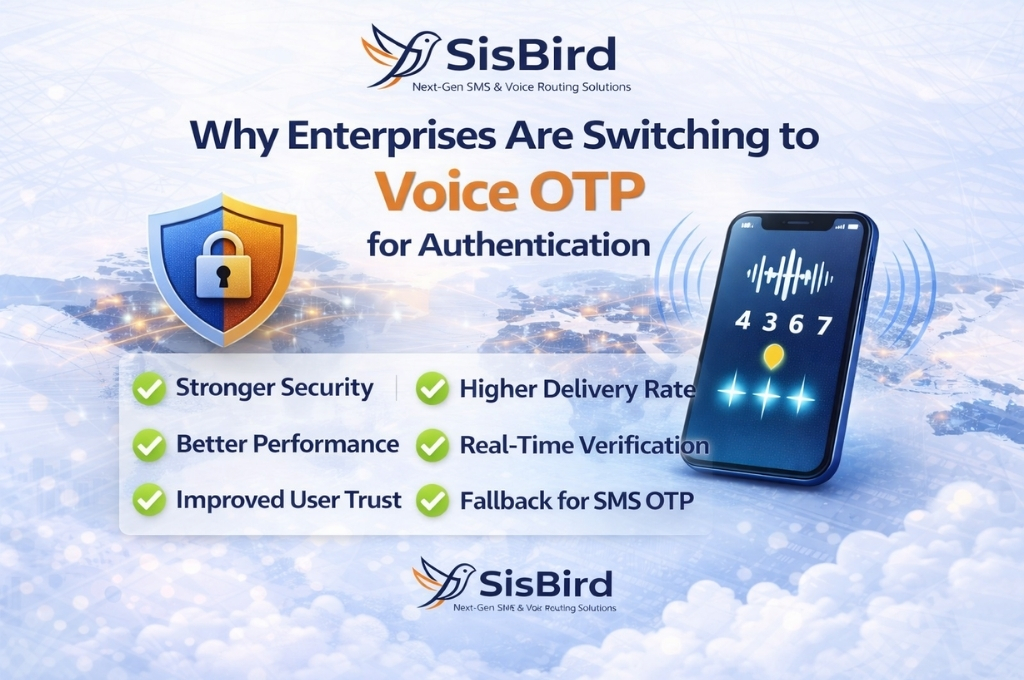
Voice OTP & A2P SMS Routes Available

Voice OTP vs SMS OTP: Which is More Secure for Businesses?


In today’s digital landscape, securing user authentication is more critical than ever. Businesses across fintech, e-commerce, and telecom rely heavily on One-Time Passwords (OTP) to verify users and prevent fraud.
The two most widely used methods are SMS OTP and Voice OTP.
But the key question is:
Which one is more secure for your business?
In this guide, we break down Voice OTP vs SMS OTP, comparing security, reliability, and real-world use cases to help you make the right decision.
What is SMS OTP?
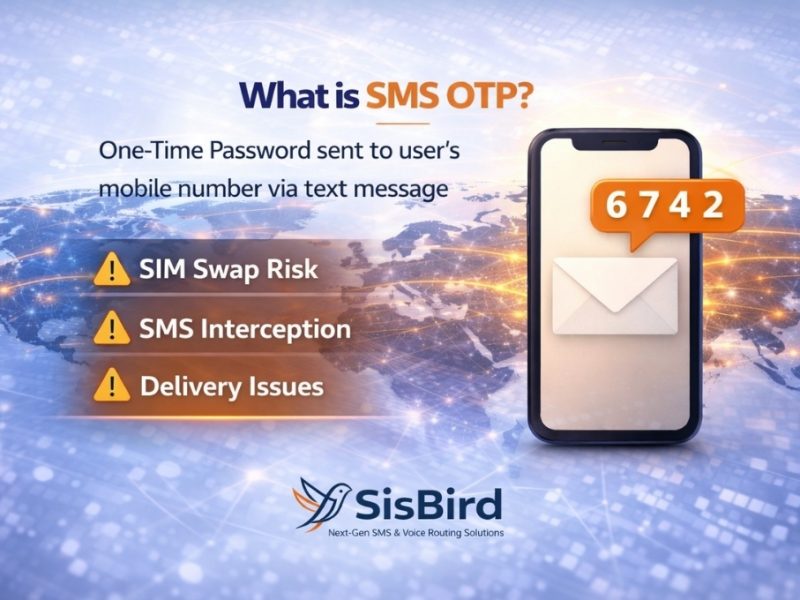
SMS OTP (Short Message Service One-Time Password) is a verification code sent to a user’s mobile number via text message.
Key Features:
- Fast and widely supported
- Easy to implement
- Cost-effective for bulk messaging
Limitations:
- Vulnerable to SIM swap attacks
- Delivery delays in some regions
- Can be blocked by spam filter
What is Voice OTP?
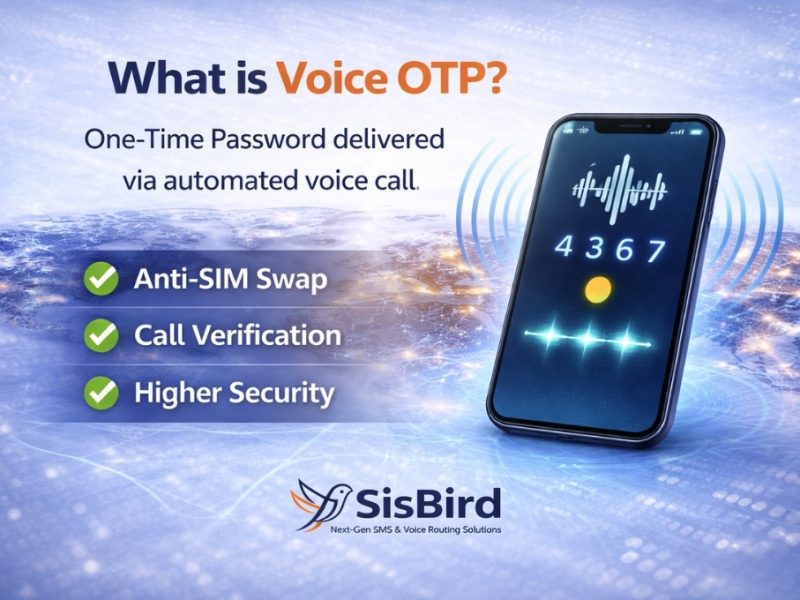
Voice OTP delivers the verification code through an automated voice call using Text-to-Speech (TTS) or pre-recorded audio.
Key Features:
- Works even without SMS access
- Higher reach in low-network areas
- Difficult to intercept compared to SMS
Limitations:
- Slightly higher cost
- Requires user to answer call
Voice OTP vs SMS OTP: Security Comparison
| Feature | SMS OTP | Voice OTP |
|---|---|---|
| Interception Risk | High (SIM swap, malware) | Low |
| Network Dependency | SMS network | Voice network |
| Fraud Resistance | Moderate | High |
| Delivery Reliability | Medium | High |
| User Experience | Silent & quick | Interactive |
Why Voice OTP is More Secure
1. Protection Against SIM Swap Attacks
SMS OTPs can be intercepted if a fraudster gains control of a user's SIM card.
Voice OTP adds an extra layer by requiring real-time call access.
2. Lower Risk of Malware Interception
Malicious apps can read SMS messages silently.
Voice calls, however, are harder to intercept programmatically.
3. Real-Time User Interaction
Voice OTP ensures that:
- The user is physically present
- The number is active and reachable
4. Better Delivery in Challenging Regions
In regions where SMS delivery is unreliable, voice routes often perform better, increasing both security and success rate.
When Should You Use SMS OTP?
SMS OTP is ideal for:
- Low-risk verifications
- Mass user authentication
- Cost-sensitive operations
When Should You Use Voice OTP?
Voice OTP is best for:
- Banking & fintech security
- High-value transactions
- Account recovery processes
- Regions with poor SMS delivery
Best Practice: Use Both (Hybrid Approach)
Smart businesses don’t choose one, they combine both.
Recommended Strategy:
- Send SMS OTP first
- If delivery fails → trigger Voice OTP fallback
This ensures:
- Maximum delivery rate
- Improved user experience
- Stronger fraud protection
How SisBird Helps
At SisBird, we provide:
- High-quality Voice OTP routes
- Reliable A2P SMS delivery
- Direct carrier connections
- Global telecom routing solutions
Our infrastructure ensures:
→ High delivery rates
→ Low latency
→ Secure authentication channels
Looking for reliable Voice OTP or SMS routes?

Next-Gen
Routing Solutions
Looking for stable SMS or voice routes? We are ready to help.
Start Your Routing Partnership
FAQ...
1. Is Voice OTP safer than SMS OTP?
Yes, Voice OTP is generally more secure because it is less vulnerable to SIM swap and malware attacks.
2. Why do some OTP messages fail?
SMS OTP can fail due to network issues, filtering, or incorrect routing. Voice OTP can act as a reliable fallback.
3. Which OTP method is best for fintech?
Voice OTP is best for high-security situations like banking and financial transactions.
4. Can businesses use both SMS and Voice OTP?
Yes, using both methods together improves delivery rates and enhances security.
5. Is Voice OTP expensive?
Voice OTP is slightly more expensive than SMS, but it provides higher security and reliability.
🏁 Conclusion
Both SMS OTP and Voice OTP play important roles in user authentication. However, when it comes to security and reliability, Voice OTP clearly has the edge.
For modern businesses, the best approach is a hybrid OTP strategy, combining the speed of SMS with the security of voice.