
The Role of SIP Routing in Modern Telecom Networks

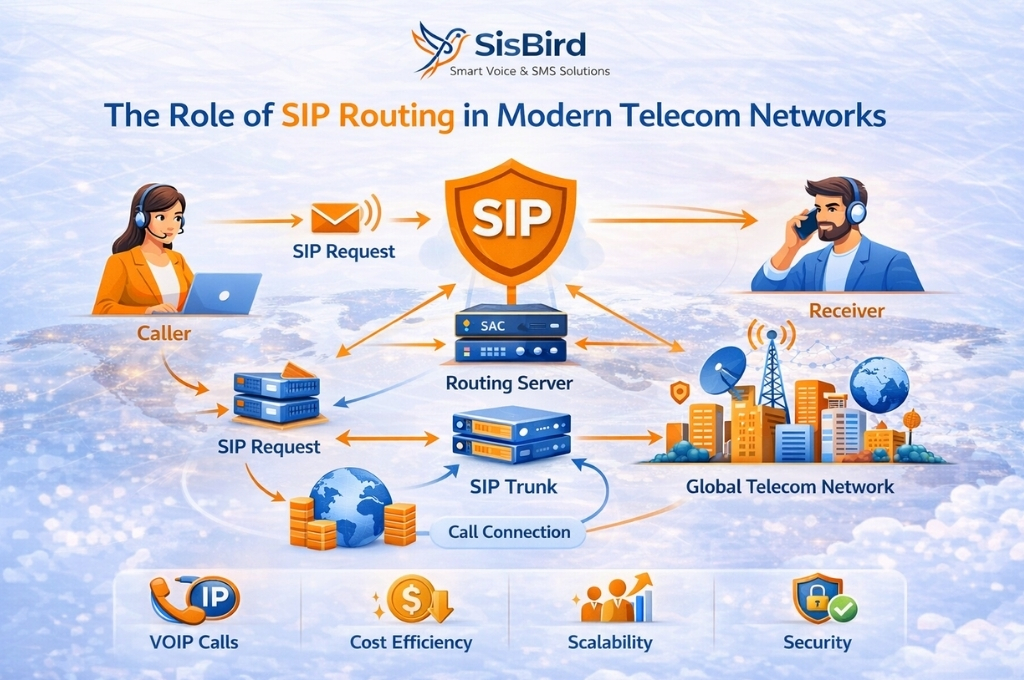
Modern communication relies heavily on internet-based technologies, and at the heart of this transformation lies SIP routing.
From voice calls to video conferencing and Voice OTP delivery, SIP routing plays a critical role in ensuring fast, reliable, and scalable communication across global networks.
Behind the scenes, strong telecom routing infrastructure enables SIP routing to function efficiently, connecting users across different carriers and regions.
What is SIP Routing?
SIP routing (Session Initiation Protocol routing) is the process of directing communication sessions-such as voice or video calls-over IP networks.
It determines:
- Where the call should go
- Which route to use
- How to connect endpoints efficiently
To understand the broader system, explore our guide on how VOIP routing works behind the scenes.
How SIP Routing Works

SIP routing operates through a structured process:
1. SIP Request Initiation
When a user makes a call, a SIP request is sent to the server.
2. Route Decision
The SIP server analyzes:
- Destination
- Network availability
- Routing rules
3. Call Routing via Carriers
The call is routed through interconnected telecom networks using VOIP routing systems.
4. Session Establishment
Once the destination is reached, the session is established and communication begins.
Why SIP Routing is Important in Modern Telecom
1. Enables Global Communication
SIP routing connects users across:
- Countries
- Networks
- Devices
It is a key part of global telecom routing systems.
2. Improves Call Efficiency
By selecting optimal routes, SIP routing:
- Reduces latency
- Improves call quality
- Minimizes call drops
3. Cost Optimization
Using techniques like least cost routing, SIP routing helps businesses reduce communication costs.
4. Supports Scalability
SIP routing allows:
- High call volumes
- Multi-channel communication
- Enterprise-level scalability
5. Enhances Security
Modern SIP routing supports:
- Encryption protocols
- Secure session handling
- Fraud prevention systems
This is especially important for voice-based authentication systems like Voice OT
SIP Routing vs Traditional Telephony
| Feature | SIP Routing | Traditional Telephony |
|---|---|---|
| Infrastructure | Internet-based | Physical lines |
| Scalability | High | Limited |
| Cost | Lower | Higher |
| Flexibility | Very High | Low |
SIP Routing in Business Use Cases
SIP routing powers:
- Call centers
- Voice OTP systems
- TTS voice broadcasting
- International communication
Businesses often combine this with A2P SMS delivery systems for omnichannel communication.
Read our guide on best practices for A2P SMS delivery and routing.
SIP Routing & Security Best Practices

To ensure secure SIP routing:
- Use SIP TLS and SRTP encryption
- Monitor traffic for fraud
- Implement authentication controls
Learn more about authentication security in our SMS OTP vs Voice OTP comparison guide.
How SisBird Powers SIP Routing
At SisBird, we offer:
- Advanced SIP routing solutions
- Low latency global routes
- Smart routing with failover
- Secure telecom infrastructure
Our services are built on strong VOIP routing systems, ensuring high-quality communication worldwide.
Looking for a reliable telecom routing provider? SisBird delivers scalable solutions for modern businesses.
Looking for high-performance SIP routing solutions?

Next-Gen
Routing Solutions
Start Your Routing Partnership
FAQ...
1. What is SIP routing?
SIP routing is the process of directing voice and communication sessions over IP networks using the SIP protocol.
2. How does SIP routing work?
It routes calls through SIP servers, carriers, and telecom infrastructure using intelligent routing logic.
3. Why is SIP routing important?
It improves call quality, reduces costs, and enables global communication.
4. Is SIP routing secure?
Yes, with encryption and proper configuration, SIP routing is highly secure.
5. How is SIP routing different from VOIP?
SIP is a protocol used within VOIP systems to manage and route communication sessions.
🏁 Conclusion
SIP routing is a foundational technology in modern telecom networks, enabling seamless communication across the globe.
It ensures:
- Efficient call routing
- High scalability
- Secure communication
- Cost optimization
As businesses continue to adopt digital communication, SIP routing will remain a critical component of telecom infrastructure.