
Voice OTP vs SMS OTP: Which Verification Channel Should You Use?
Voice OTP vs SMS OTP: SMS is cheaper and faster to integrate, voice recovers the users SMS loses. For most platforms the answer is not one or the other; it is knowing when each fails.
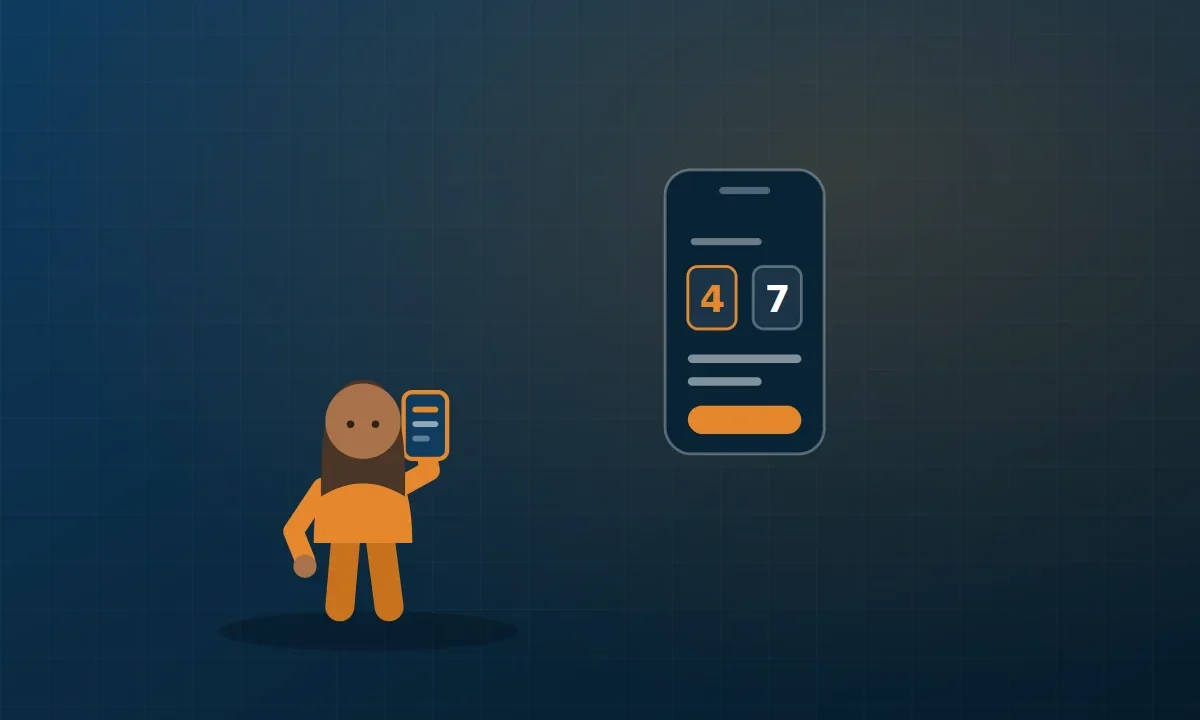
Most verification funnels are measured on messages sent, not users verified. The gap between those two numbers is where this decision lives.
How each channel actually fails
SMS OTP fails quietly. The message is accepted by the network, your dashboard shows a delivery, and the user still never sees a code. The usual causes are operator anti-spam filtering that cannot distinguish OTP from bulk, latency that pushes the code past the point of usefulness, a full or unattended inbox, or a SIM that has just been swapped onto someone else’s device.
Voice OTP fails visibly. The call is not answered, is rejected, or hits voicemail, and you know immediately, because the disposition comes back in the call record. That visibility is worth something on its own: a failure you can see is a failure you can retry intelligently.
Security: the honest comparison
Voice OTP is harder to intercept than SMS OTP for most realistic attacks. A spoken code is not stored in a message inbox, is not silently forwarded by malware with SMS-read permissions, and does not arrive automatically on a swapped SIM.
It is not immune. An attacker with call-forwarding control on the target number intercepts a voice OTP as easily as an SMS one, and social engineering works on both. Neither channel is a substitute for risk-based authentication, device binding or a proper second factor on genuinely high-value actions. Treat voice as a meaningful improvement, not a solved problem.
Cost: the denominator matters
A voice call costs more than an SMS almost everywhere. Per verified user, the comparison is less obvious. In a market where your SMS completion sits at seventy per cent, the arithmetic on the thirty per cent you are losing, abandoned signups, support contacts, repeat attempts, frequently favours placing a voice call for the ones that fail.
The mistake is comparing per-message cost. Compare cost per verified user, in the specific market, using your own numbers.
The pattern that works: SMS first, voice on failure
Almost no platform should choose one channel. The sequence that performs is:
- Send the SMS OTP. It is cheaper and less intrusive.
- Start a timer, thirty to sixty seconds is typical.
- If the code has not been submitted when the timer expires, place a voice call with the same code.
- Record which channel completed the verification, per market, and let that data drive the timer.
Two things make this work in practice. Both channels need to be on one account so the retry is a single decision rather than a second integration and a second reconciliation. And the timer needs to be per market, because the window that is right in the UK is far too short in a market where SMS routinely takes ninety seconds.
When to lead with voice
- Account recovery and password reset. The user has no other route back in, so a delivery failure is maximally expensive.
- High-value transactions. Transfers, withdrawals, beneficiary changes.
- Markets where SMS OTP completion is poor. If your data says a market is under seventy per cent, stop defending it.
- Feature-phone and low-literacy user bases. A spoken code reaches users a text message does not.
What to measure
Stop reporting on delivery rate alone. The metrics that tell you whether verification is working are completion rate per channel per market, median time from request to code submission, the share of users who needed a second attempt, and cost per verified user. Delivery rate is an input to those, not a substitute for them.
If you want to test this properly, send us the destinations where your SMS OTP is underperforming and we will route them by voice on a test account so you can compare the completion rates directly.
Keep reading
Related insights
How to Test a Wholesale SMS Route
A rate sheet tells you the price, not whether the message arrives. Here is what to agree before a test route is…

How Wholesale A2P SMS Pricing Works
Why two suppliers quote the same destination at very different rates, what actually sits inside a per-message price, and the billing details…
What Are A2P SMS Routes? Direct vs Grey Routing Explained
A2P SMS routes decide your delivery rate, your latency and whether your sender ID survives. Here is how direct, transit and grey…